
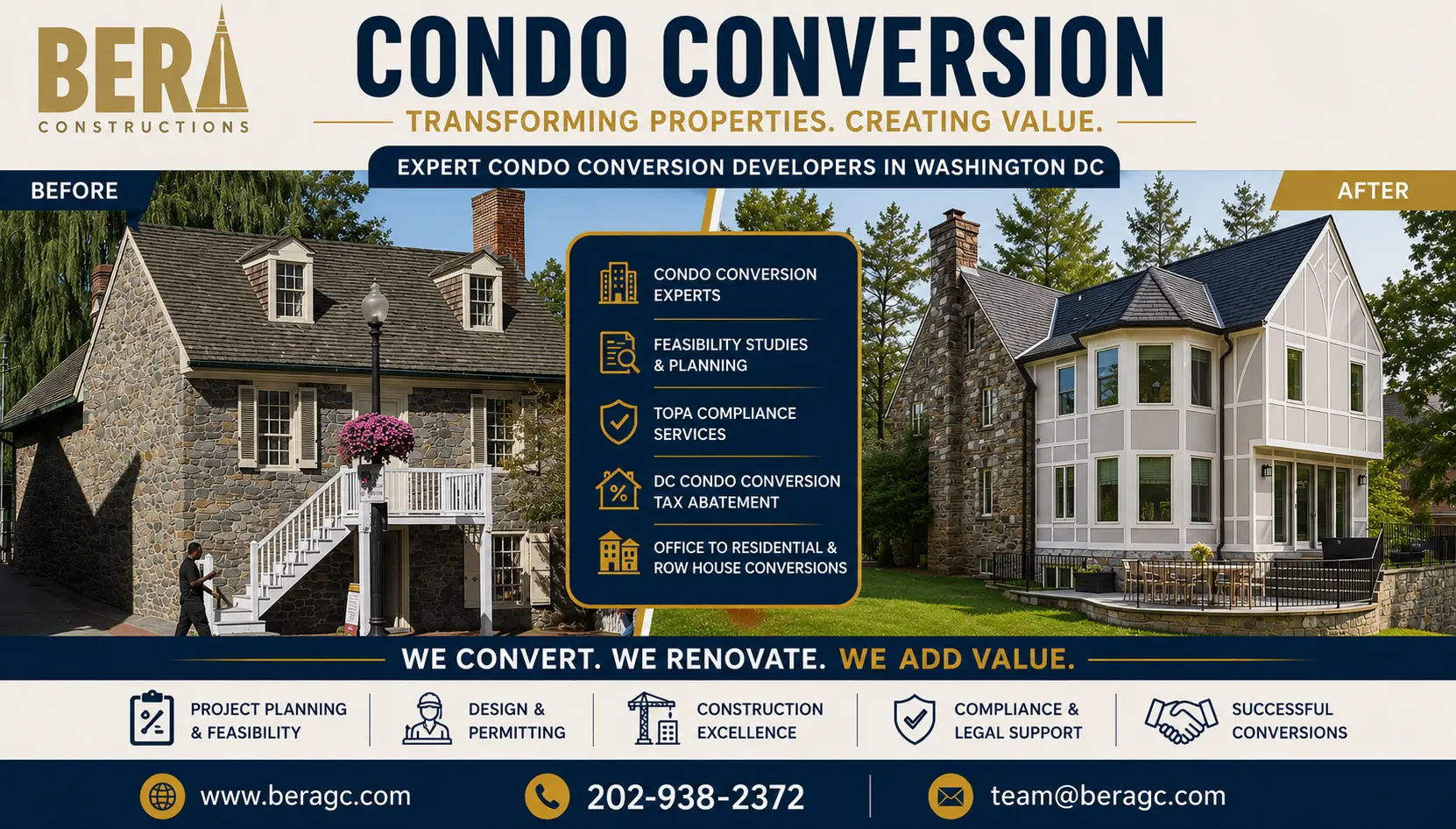
The demand for Condo Conversion projects in Washington DC continues to grow as property owners, investors and developers look for practical ways to maximise the value of existing buildings. Whether you own a multi-family property, a historic row house or an underused commercial building, working with experienced condo conversion developers can help you unlock new investment opportunities while meeting all local legal and planning requirements.
Washington DC’s competitive real estate market has created a strong demand for quality condominiums, making residential property conversions an attractive option for landlords and developers alike. However, every successful project requires careful planning, regulatory compliance and expert project management.
What Is a Condo Conversion?
A Condo Conversion is the process of converting an existing residential or commercial property into individually owned condominium units. Instead of selling an entire building, owners can sell separate units while retaining or selling common areas under a condominium association.
Common property types converted into condominiums include:
- Apartment buildings
- Multi-family residential properties
- Mixed-use buildings
- Historic buildings
- Commercial offices
- Row houses
Each property type requires different planning, engineering and legal documentation before the conversion can be completed.
Why Condo Conversions Are Growing in Washington DC
Washington DC remains one of the strongest property markets in the United States. Rising housing demand and limited development land have encouraged owners to redevelop existing buildings rather than construct new ones.
Professional condo conversion developers help clients:
- Increase property value
- Generate higher returns on investment
- Sell individual residential units
- Improve ageing buildings
- Meet current building regulations
- Create long-term investment opportunities
Many investors now consider condo conversions one of the most profitable redevelopment strategies in the DC metropolitan area.
Office to Residential Conversion DC
One of the fastest-growing trends is the Office to residential conversion DC market. As hybrid working continues to reshape commercial real estate, many office buildings have become partially vacant.
Converting office buildings into residential condominiums allows developers to revitalise underutilised properties while helping meet Washington DC’s growing housing demand.
A successful office conversion typically involves:
- Structural assessments
- Building code compliance
- Mechanical and electrical upgrades
- Fire safety improvements
- Accessibility enhancements
- Modern residential layouts
Experienced developers ensure these complex projects are completed efficiently while complying with local regulations.
Row House Condo Conversion DC
The Row house condo conversion DC market has become increasingly popular due to the city’s historic neighbourhoods.
Converting a traditional DC row house into two or more condominium units enables owners to increase property value while preserving the architectural character of the building.
Successful row house conversions require:
- Zoning reviews
- Structural engineering
- Architectural planning
- Historic preservation considerations
- Utility separation
- Condominium legal documentation
Professional guidance helps avoid costly delays during approvals.
Condo Conversion Feasibility Study DC
Every successful project begins with a comprehensive Condo conversion feasibility study DC.
This study determines whether a property is financially and legally suitable for conversion by evaluating:
- Property condition
- Market demand
- Estimated renovation costs
- Local zoning regulations
- Expected resale values
- Construction timelines
- Investment returns
A detailed feasibility study reduces financial risk and provides owners with realistic expectations before significant investment begins.
Understanding TOPA Compliance Services Washington DC
One of the most important legal considerations is TOPA compliance services Washington DC.
The Tenant Opportunity to Purchase Act (TOPA) provides tenants with specific rights when residential properties are sold or converted. Property owners must follow strict notification procedures and legal timelines before proceeding with certain condominium conversion projects.
Professional condo conversion developers often work alongside experienced legal specialists to ensure:
- Proper tenant notifications
- Required documentation
- Regulatory compliance
- Deadline management
- Smooth transaction processes
Ignoring TOPA requirements can result in costly delays and legal complications.
DC Condo Conversion Tax Abatement
Many property owners also explore the available DC condo conversion tax abatement programmes.
Tax incentives may help reduce project costs by encouraging redevelopment and residential housing creation. Eligibility depends upon the property’s location, redevelopment scope and applicable District regulations.
Before beginning a project, developers should review available tax incentives with experienced professionals to maximise financial benefits.
Choosing the Best Condo Conversion Developers
Selecting the right development partner is critical to project success.
Look for developers who offer:
- Extensive Washington DC experience
- Proven condo conversion portfolio
- Architectural and engineering coordination
- Zoning and permitting expertise
- Construction management
- Legal compliance support
- Transparent project communication
An experienced team can streamline the entire process from initial planning through to final condominium registration.
Final Thoughts
Washington DC continues to offer outstanding opportunities for residential redevelopment through professional Condo Conversion projects. Whether you’re considering an Office to residential conversion DC, planning a Row house condo conversion DC, undertaking a Condo conversion feasibility study DC, managing TOPA compliance services Washington DC, or exploring DC condo conversion tax abatement opportunities, working with experienced condo conversion developers significantly improves the likelihood of a successful outcome.
By combining expert planning, regulatory knowledge and quality construction management, property owners can transform existing buildings into valuable residential communities while achieving strong long-term returns.
Frequently Asked Questions
1. What is a condo conversion?
A condo conversion is the process of converting an existing building into individually owned condominium units while creating shared common areas managed by a condominium association.
2. Why is a condo conversion feasibility study important in DC?
A feasibility study evaluates financial viability, zoning, structural requirements, market demand and project costs before construction begins, helping reduce investment risk.
3. What are TOPA compliance services in Washington DC?
TOPA compliance services assist property owners in meeting the legal requirements of the Tenant Opportunity to Purchase Act, including tenant notifications and regulatory documentation.
4. Can office buildings be converted into residential condominiums?
Yes. Many developers now specialise in Office to residential conversion DC projects by redesigning vacant commercial buildings into modern residential condominiums.
5. Are there tax benefits for condo conversions in Washington DC?
Certain projects may qualify for DC condo conversion tax abatement or other redevelopment incentives, depending on eligibility requirements and current District regulations.